Summer Heat Can Burn Dogs Feet

Excessive, extreme, and extra may describe this relentless summer heat. You aren’t alone if you don’t ever remember summers being so hot. This year is the 5th warmest year on record. Our pets feel it, too, and this heat is burning their feet. Today, we’ll discuss safe times and temps to walk your dog, what surfaces to avoid, and how you can protect your pet’s paw pads. 

1) What temperature places our dog’s paw pads at risk of burning? 

Around 76-77F is the temperature that places your dog’s paw pads at risk for burning. It only takes 60 seconds to burn a dog’s paw pads. 

Ground heat is hotter than the air temperature. 

Before you walk, always check the heat index on your phone’s weather app. It will show you the temperature, yet, scroll down and view “what it feels like.” That is the heat index. This guide gives you an idea of how long you can walk your dog and where you can go to walk them safely. Keep in mind that heat exhaustion and heat stroke are additional dangers to your pet’s health when walking them. 

Paw pads aren’t just cute; they provide balance, stability, traction, and shock absorption for joints and bones. They have sweat glands that help to regulate body temperature. As unique as paw pads are, they are not burn-resistant. 

2) We know that asphalt and concrete surfaces can be too hot; what other surfaces heat up quickly?

Sandy beaches, sunny docks, decks, piers, artificial grass, a truck bed or boat floor, tennis courts, and brick or metal walkways are surfaces that can retain extreme heat from the sun and burn your dog’s feet. 

www.GibbsTheHusky.com

3) What are some safe options we can do to protect our dog’s feet from the heat? 

Do you know that phrase, “got it made in the shade”? Make it your mantra when the heat is extreme. You may have to rethink your walking route according to the time of day and where you live. Early morning walks are best. If your pet needs a potty break during the day’s heat, take the 7-second test. Place your hand on the concrete or asphalt for 7 seconds. If it is too hot, take your dog for a walk on natural grass or choose a shaded route. 

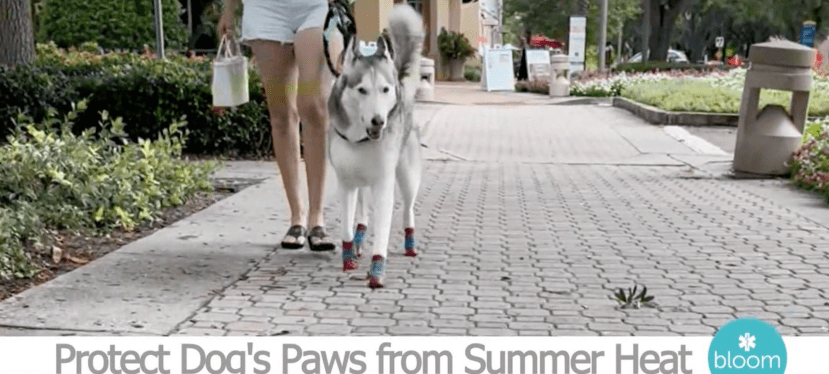
Booties or socks are a great option to protect your dog’s paw pads. Our husky, Special Agent Gibbs, is trained to walk with socks on sidewalks and hiking booties when we walk or hike nature trails. The only thing to pay attention to is the dewclaw on their front leg. It must be inside the bootie or sock to avoid getting injured or irritated. 

Paw protection balm or wax is another way to help keep paw pads healthy. Easy to place on the paw pad and rub in and can help prevent cracking or dryness. 

Summer days may be longer, yet our dogs’ walks must be shorter. Walking early and late definitely helps to beat the heat. Prevention is the solution to keep your dog healthy, happy, and safe.

This summer, it’s time for pet parents to be on paw patrol!
How to Help Your Dog Beat Summer Heat

The heat is on! It’s on the street! The heat is on! Summer can be a dangerous season for your pet! Some of the most common health dangers include dehydration, heat exhaustion, and burnt paw pads. Here are some ways to keep your dog safe and healthy.

It’s best to exercise your dog earlier in the morning or later at night. If your dog is like mine, he needs a few additional potty breaks! As the temperature & humidity rise, so does the asphalt your dog walks on. Interesting fact, when it is 77F outside, asphalt can be 125F.

It’s not just sidewalks that are dangerous. Surfaces that get hot are boat docks, decks, bike paths, sand on beaches, the floor of a boat, or the back of a truck. Keep this in mind; skin destruction occurs in a fast 60 seconds!

So how do you know if the sidewalk or road is too hot for your dog’s paw pads? Take the 7-second test. I’ll place my hand on the sidewalk for 7 seconds. If it is too hot for me, it is too hot for Gibbs!

Your dog will let you know if their paw pads give them discomfort after a walk or exercise. Look for limping, excessive licking, or blisters following a walk on the pavement.

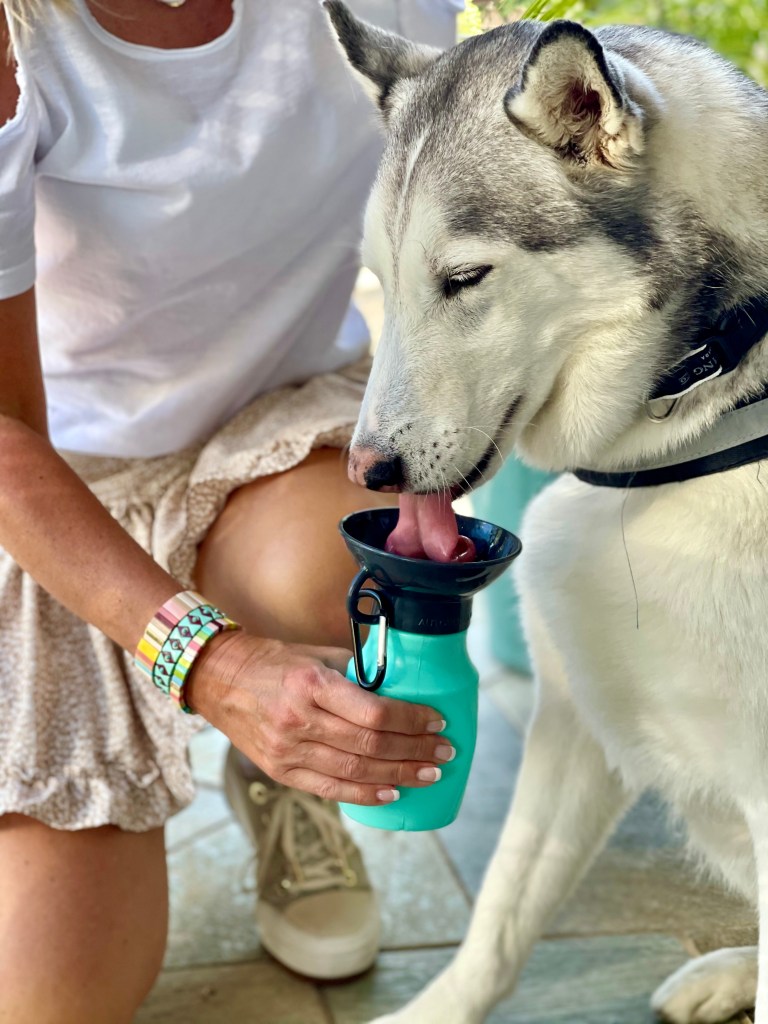
The first and most important type of gear you will need for your dog is a water bottle. Hydration, hydration, hydration! As NCIS special agent Gibbs says, “Grab your gear!”, you are going to do the very same thing to keep your dog safe during the summer heat. Your dog requires an ounce of water per lb of body weight. When out in the heat, be sure to provide a water stop at least once every 15-20 minutes. Gibbs uses Highwave Auto Dog Mug Leak-Tight Mini. We do have a partnership with them. Make sure to use promo code GIBBS 15. This water bottle won’t waste water like collapsable water trays, it fits easily into our auto cup holder, it won’t leak in my backpack or on me after using it, and it can double for a makeshift food tray when we are not home for dinner time. You know how our dogs can be around dinner time!

https://www.gibbsthehusky.com

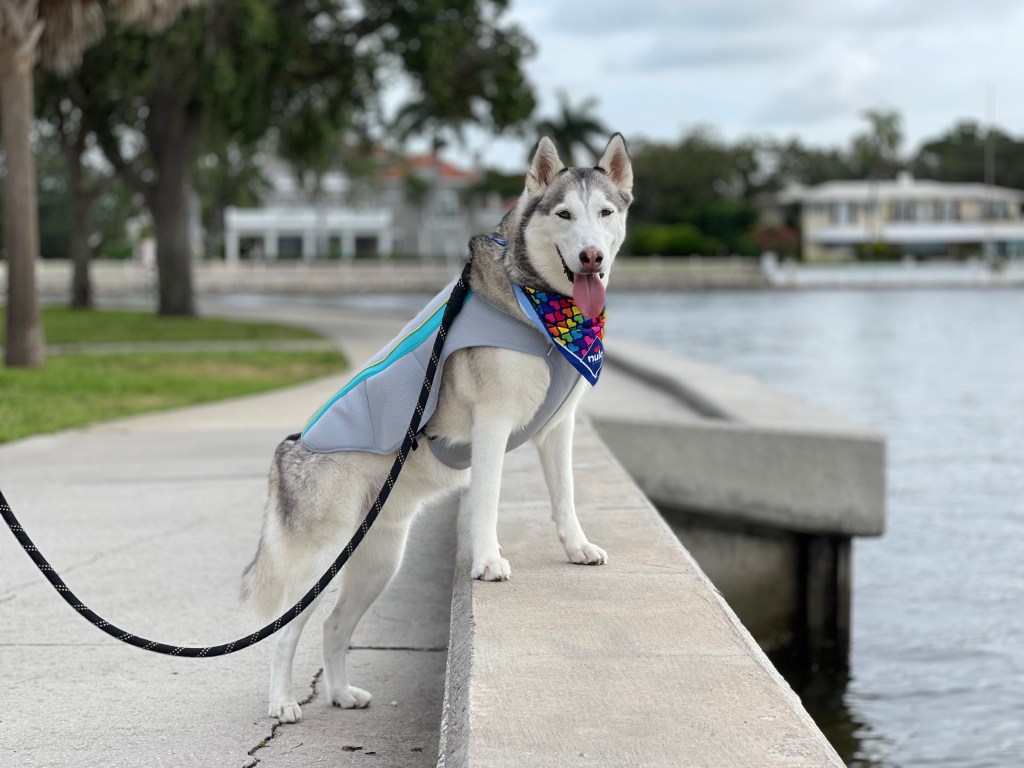
The second type of gear to check out for your dog is a cooling vest. Cool technology. Rinse the vest in cool water. If you can, place it in the freezer for about 2-3 minutes. Take it out and put it on your dog. As the water evaporates, it takes the body heat your dog is generating with it. It boosts the cooling by offering the maximum amount of shade and thermal protection. The material has a rating of 50+ UPF protection, which blocks 98% of the sun’s UV rays. Gibbs has the RuffWear cooling vest. I get almost 90 minutes outside for a walk with him wearing this gear. If you are hiking or somewhere that you will be out longer, saturate the vest in water to reactivate the technology.

If walking your dog on grass or surfaces is not possible, the last type of gear to consider is dog booties. Keep in mind that your dog has sweat glands in its paw pads, so don’t keep the booties on for longer than necessary when it’s hot out. You don’t want them to get overheated. Fitting is important. Measure the width of the paw pad accordingly before ordering. I bought Gibbs’ booties at Woof Gang St. Pete.

Finally, it’s crucial to be proactive and recognize if or when your dog is experiencing heat exhaustion. Heat exhaustion happens when your pet’s body temperature rises above a healthy range, and the pet is unable to regulate its body heat.

Signs of heat exhaustion are:
Excessive panting
Confusion or disorientation
Vomiting or diarrhea
Discoloration of tongue and gums

Gibbs goes with us just about everywhere. In the summer, though, that is not always the case. Although I love taking him to restaurants or walking him on the pier in St. Pete, the concrete may be too hot for him. I love how he enjoys walking or playing on sandy beaches or with other dogs at dog bars or events, yet event with the summer gear, mentioned, it could lead to heat exhaustion. I have to know when to say NO for his health and safety. After all, I’m not the one wearing a fur coat in the heat and humidity that always sizzles in the summer.